Nicolaus Copernicus
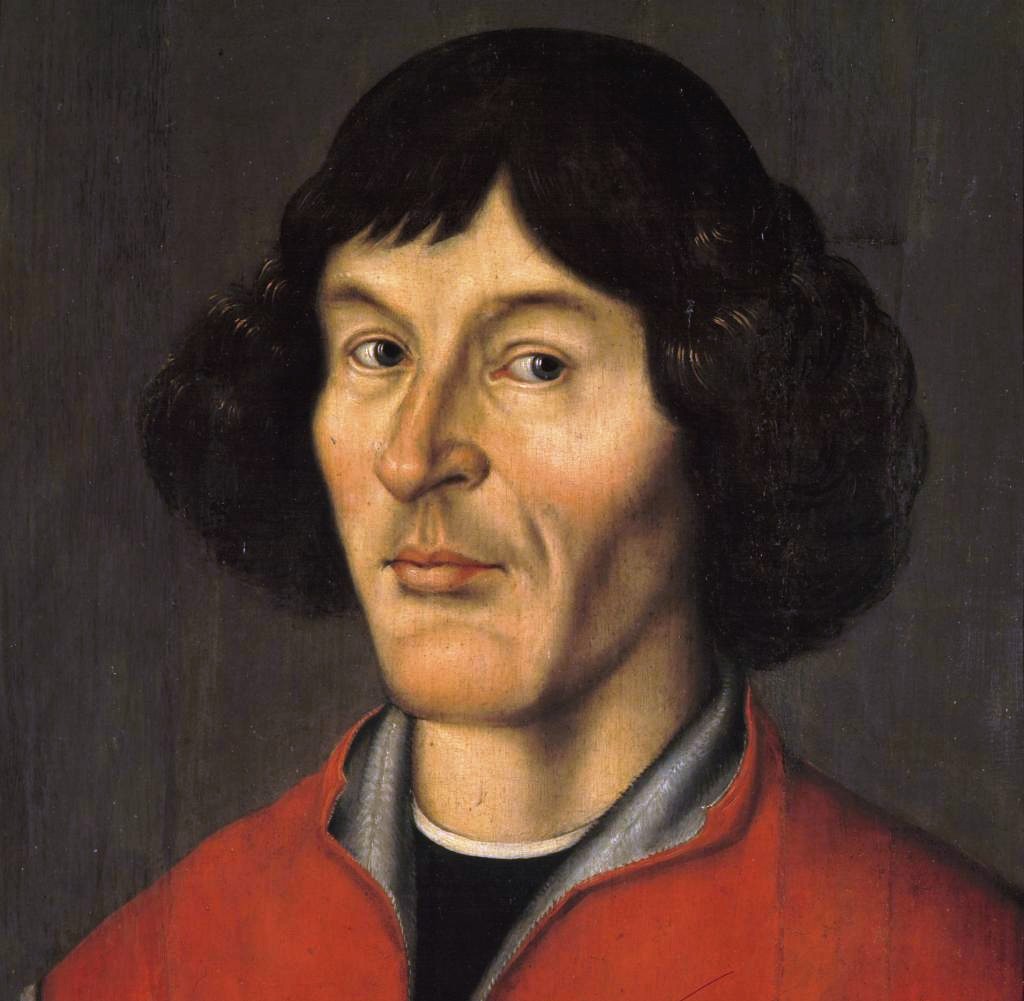
Nicolaus Copernicus (1473–1543) developed an astronomical system in which Earth rotates and revolves around the Sun. His research, conducted alongside legal, medical and administrative work, culminated in his major publication of 1543. This biography places his life, innovations and the limitations of his model in historical context.
Who was Nicolaus Copernicus?
Nicolaus Copernicus was a Renaissance astronomer and mathematician who placed Earth among the planets and explained their motions within a Sun-centred arrangement. He lived from 1473 to 1543. His historical importance lies not merely in suggesting a central Sun, but in developing the idea into an extensive system of mathematical astronomy. His principal work, De revolutionibus orbium coelestium, appeared in 1543, the year of his death.
Birth, names and historical setting
He was born in Toruń on 19 February 1473. His Polish name is Mikołaj Kopernik and his Latin name Nicolaus Copernicus; Nikola Kopernik is used in Turkish. Toruń, on the Vistula, belonged to Royal Prussia under the Polish crown. The city had connections with both German- and Polish-speaking cultures. Its multilingual historical setting should not simply be equated with modern categories of nationality.
Family and his uncle Lucas Watzenrode
His father Nicolaus was a merchant, and his mother was Barbara Watzenrode. After his father’s death in 1483, his maternal uncle Lucas Watzenrode played a decisive role in the children’s education. Later bishop of Warmia, Watzenrode supported his nephew’s studies and ecclesiastical career. This family connection helped provide the material and institutional conditions in which Copernicus could pursue research.
Studies in Kraków
He entered the University of Kraków in 1491. His interest in mathematics and astronomy grew there, and he acquired astronomical tables and geometrical works. There is no record that he obtained a degree, which was not exceptional in the educational and professional circumstances of the time. Kraków was an important foundation for the calculation and geometrical modelling central to his later work.
Bologna, Padua and Ferrara
In 1496 he began studying canon law at Bologna. Working with the astronomer Domenico Maria Novara, he participated in observations; learning Greek also helped him examine ancient texts. He subsequently studied medicine at Padua and obtained a doctorate in canon law at Ferrara in 1503. Although he did not take a medical degree, he later practised medicine. His education reflects a Renaissance learning extending well beyond astronomy.
Duties in Warmia and Frombork
He held an income-bearing ecclesiastical position as a member of the Warmia cathedral chapter. Frombork became one of the principal centres of his life and astronomical work. His duties included estate management, accounts, meetings and disputes. An image of Copernicus isolated permanently in an observatory is incomplete: he combined scientific research with administration and medical practice.
Medicine, translation and humanist learning
He served as a physician to his uncle and others in ecclesiastical circles. He translated letters by Theophylactus Simocatta from Greek into Latin, publishing the translation in 1509. This work illustrates his connection with humanist textual scholarship. Studying ancient languages and sources also mattered for astronomy: he examined inherited knowledge while developing a new system.
Olsztyn and monetary reform
His responsibilities at Olsztyn involved land and revenue administration as well as regional political problems. He studied currency debasement and prepared proposals for reform. Observations concerning inferior coins driving more valuable money from circulation contributed to his reputation in economic history. These ideas should be understood within the period’s problems of coinage and minting rather than simply identified with later terminology.
Astronomy before Copernicus
In the Ptolemaic tradition, Earth was treated as stationary and central, while apparent celestial motions were calculated through geometrical constructions. This was not merely a simple mistaken belief: it included sophisticated computational techniques. Ancient Greek and Islamic astronomers had criticized models and developed new mathematical tools. Copernicus worked within this long inheritance, and Sun-centred ideas also had ancient precedents.
The Commentariolus: an early outline
The Commentariolus, generally dated to around 1510–1514, was a short outline of the new arrangement. It circulated in manuscript within a limited circle rather than as a printed book for a broad readership. It summarized principles including Earth’s motion and the arrangement of planets around the Sun. This early outline shows that work on the model preceded the major publication by many years.
The central idea of the heliocentric model
Copernicus explained the daily appearance of celestial motion through Earth’s rotation. He placed Earth among the bodies revolving around the Sun, while the Moon revolved around Earth. The observer’s own location thus became part of a moving system. This provided a new perspective in which some apparent motions in the sky resulted from the movement of Earth itself.
Explaining apparent retrograde motion
Outer planets such as Mars sometimes appear to move backwards relative to the stars. In a Copernican arrangement, this results from Earth and the other planets orbiting at different speeds. As faster-moving Earth overtakes an outer planet, the direction of sight changes. The planet does not actually stop and reverse along its orbit. The model related planetary order and periods within one framework.
The model’s limits: circles and observations
His system did not contain every feature of the modern Solar System model. Copernicus retained the ideal of uniform circular motion and used additional geometrical constructions. Kepler later established elliptical planetary orbits. The model did not automatically produce much greater accuracy in every calculation. Its historical placement of the Sun at the universe’s centre is also not a claim of modern cosmology.
Observational instruments and the telescope misconception
Copernicus did not observe through a telescope; astronomical telescopes emerged long after his death. He used instruments for angular measurements and records of earlier observations. Modern research on the astronomical panel associated with him at Olsztyn also examines his measuring methods. His theory emerged from observations, tables and sustained mathematical work rather than one discovery on a single night.
Rheticus and the Narratio prima
Georg Joachim Rheticus visited Copernicus in 1539 to study his work. The Narratio prima, published in 1540, provided one of the first substantial printed introductions to the model. Rheticus played a decisive supporting role in publishing the larger work. The episode demonstrates the importance of students, colleagues and publishing networks. Explaining Copernicus’s long delay solely through fear is inadequate.
De revolutionibus: the major work of 1543
The six-book De revolutionibus orbium coelestium was printed at Nuremberg in 1543. Its title is commonly translated as On the Revolutions of the Heavenly Spheres. Alongside the overall arrangement, it contained geometrical methods, observations and calculations, rather than merely a brief declaration of ideas. Its dedication to Pope Paul III also shows that Copernicus did not treat scholarship and ecclesiastical life as entirely separate worlds.
Osiander’s unsigned preface
During publication, Andreas Osiander added an unsigned preface suggesting that the model could be read as a calculating hypothesis without establishing physical reality. This should not be confused with Copernicus’s own preface. Describing Earth’s motion as merely a useful fiction for Copernicus misrepresents his position. The editorial intervention influenced subsequent interpretations of the book.
Reception, religious debates and later developments
Acceptance was neither immediate nor uniform. Mathematical usefulness, physical truth and scriptural interpretation raised different questions. In 1616 the Catholic Church suspended the book pending correction, decades after Copernicus’s death. Kepler’s orbital laws and Galileo’s telescopic observations made new contributions. Galileo’s trial must not be presented as an event in Copernicus’s own lifetime.
Death and the story of the final book
Copernicus became seriously ill late in 1542 and died at Frombork on 24 May 1543. A traditional account says he saw a printed copy of his book on his deathbed; the scene’s details should not be treated as fully established. Publication and death occurred in the same year. The book became a central source for scientific debates extending far beyond his lifetime.
His legacy in the history of science
Copernicus’s work prompted a reconsideration of Earth’s celestial position and the observer’s viewpoint. Later astronomy and physics both used and transformed his model. His achievement was not that every conclusion remained unchanged, but that he offered a mathematical framework that reshaped research questions. This transformation, regarded as a major beginning of the Scientific Revolution, developed through contributions from many cultures and generations.