Charles Darwin
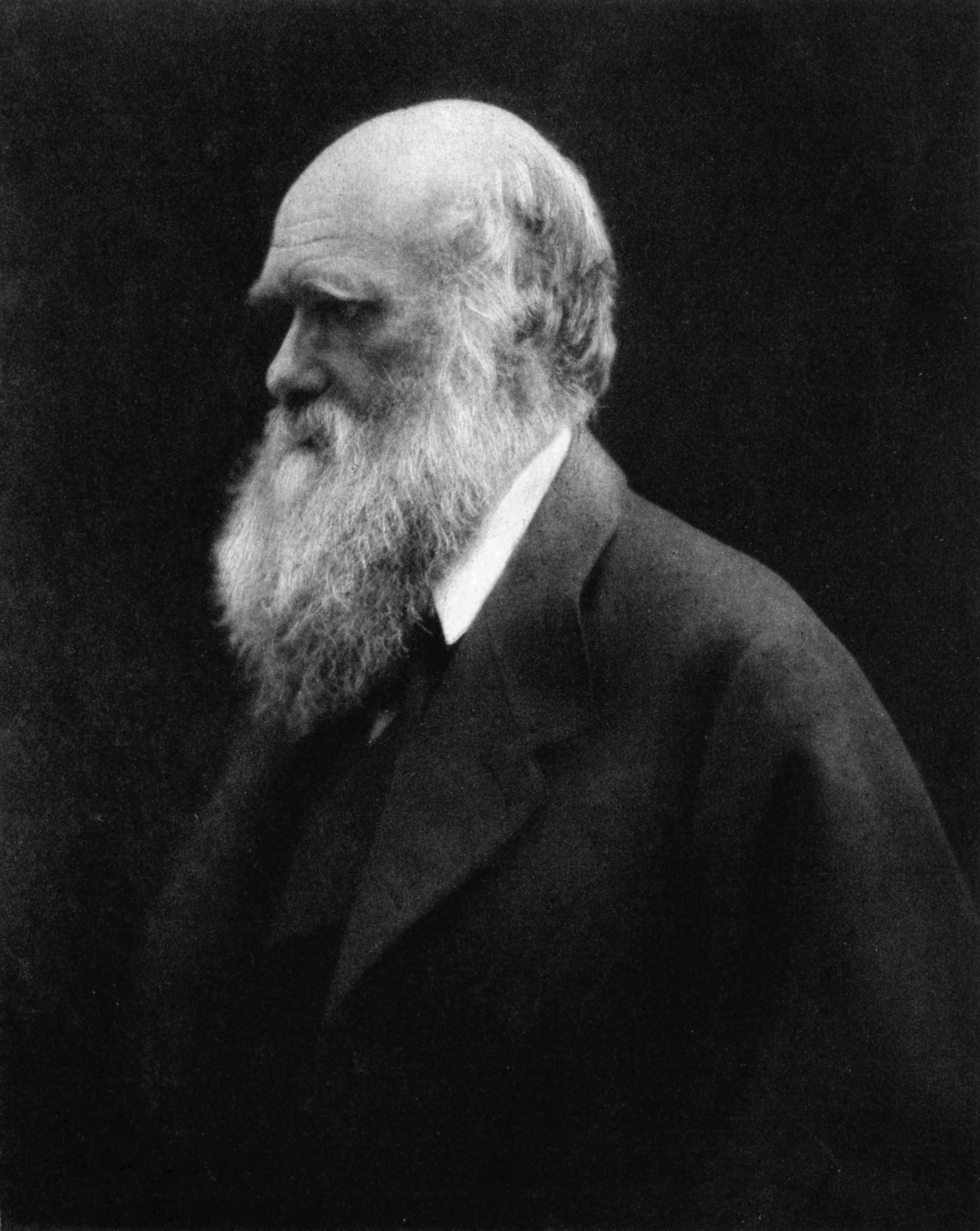
Charles Darwin (1809–1882) was an English naturalist whose work on common descent and natural selection transformed biology. He combined specimens collected during the Beagle voyage with years of experimentation and an extensive network of correspondents. This biography follows his life and writings in their historical context.
Who was Charles Darwin?
Charles Robert Darwin was an English naturalist who explained the transformation of species through common descent and natural selection. He was not the first person to propose evolution: his achievement was to assemble evidence from different fields into a powerful explanation of how change could occur. Alfred Russel Wallace independently arrived at natural selection. Darwin’s importance rests on decades of observation, experimentation and comparison as well as on his theory.
Birth, family and childhood
He was born in Shrewsbury, England, on 12 February 1809, to the physician Robert Waring Darwin and Susannah Wedgwood. Both families had strong connections with science, industry and intellectual life. His mother died when he was young. Childhood interests in plants, animals and collecting later developed into a passion for beetles, helping him acquire habits of close observation and comparison.
Edinburgh and Cambridge
He began medical studies at Edinburgh University in 1825 but did not complete his training as a doctor. His interest in natural history continued. In 1828 he entered Christ’s College, Cambridge, with an Anglican clerical career in view, and took his degree in 1831. The botanist John Stevens Henslow and geologist Adam Sedgwick encouraged his development as a field observer and scientific investigator.
The voyage of HMS Beagle, 1831–1836
Through Henslow, Darwin joined HMS Beagle under Captain Robert FitzRoy. The expedition of 1831–1836 included extensive surveying of South American coasts. Darwin made long journeys inland, collected rocks, fossils, plants and animals, and sent specimens and reports to England. The voyage exposed him to a range of environments and organisms far beyond what he could have encountered through reading alone.
Fossils, geology and a changing Earth
In South America, similarities between extinct large mammals and living animals attracted his attention. Earthquakes, raised coastlines and rock formations strengthened his understanding of a world transformed over long periods. He also connected the formation of coral reefs with movements of the Earth’s crust. Geology was a major foundation of his scientific development and of his approach to the history of life.
Galápagos observations and a common misconception
His visit to the Galápagos Islands in 1835 sharpened questions about geographical distribution. Differences among mockingbirds and the finch specimens later examined by specialists were important. Darwin did not, however, arrive on the islands and immediately formulate a complete theory of evolution. The examination of his collections in England, including work by John Gould, and years of subsequent reflection clarified the significance of what he had observed.
London, notebooks and Malthus
After returning to England, he began publishing his findings and working with specialists. From 1837 he kept notebooks on the transformation of species. Reading Thomas Robert Malthus on population in 1838 helped him think about the consequences of producing many offspring in a world of limited resources. He developed his ideas on natural selection in a short sketch in 1842 and a longer essay in 1844.
Emma Darwin, children and Down House
He married his cousin Emma Wedgwood in 1839. They had ten children, three of whom died in childhood. In 1842 the family moved to Down House in Kent. The house, gardens and nearby walking paths became the centre of his domestic and scientific life. Emma supported his work and family life, and their children sometimes joined his observations. Family relationships feature prominently in his correspondence and daily routines.
Working methods and ill health
Darwin recorded observations carefully, considered contrary evidence and gathered information from many people. His correspondence connected him with scientists, breeders and travellers. Recurring ill health restricted his working pace and travel for many years. Retrospective explanations of his illness should not be treated as established diagnoses. Experiments conducted around his home allowed him to continue investigating even when travel was difficult.
Barnacles and specialist research
Between 1846 and 1854 he undertook extensive taxonomic work on barnacles. These small marine animals provided detailed experience of variation within species and similarities in structure. The years preceding his major evolutionary publication were therefore not simply a period of private speculation: he remained an active naturalist examining specimens and publishing specialist monographs.
How does natural selection work?
In Darwin’s explanation, individuals of a species vary, and some of that variation is inherited. Under particular conditions, inherited traits that improve survival and reproductive success can become more common over generations. Physical strength alone is not decisive: colour, behaviour or the timing of reproduction can also matter. Selection makes no conscious decisions, and organisms do not deliberately acquire new traits because they need them.
Common descent, branching and artificial selection
Darwin presented the history of life as branching relationships rather than a straight ladder of progress. Groups descended from common ancestors can diverge, with some lineages becoming extinct while others persist. He used the selection practised by breeders of domestic animals and plants to illustrate the accumulation of small differences. Human preferences guide artificial selection; environmental conditions and reproductive success shape natural selection.
Alfred Russel Wallace and the joint announcement of 1858
Alfred Russel Wallace independently reached the idea of natural selection through his own research. After Wallace sent an essay in 1858, Charles Lyell and Joseph Dalton Hooker arranged a joint announcement. Materials by Darwin and Wallace were presented at the Linnean Society of London on 1 July 1858. An account of natural selection’s history must therefore give Wallace clear recognition alongside Darwin.
On the Origin of Species, 1859
On the Origin of Species appeared on 24 November 1859. It brought together domestication, variation, the struggle for existence, natural selection, fossils, geographical distribution and classification. Against the view that species were independent and fixed, it argued for common descent. Darwin also discussed difficulties confronting his explanation, revising later editions in response to criticism and new evidence.
Reception and scientific debate
The Origin prompted extensive scientific and public debate. Acceptance of evolutionary change did not necessarily imply agreement about the role of natural selection. Some investigators accepted common descent while questioning selection’s explanatory power. Darwin responded through correspondence and publications. These debates cannot be reduced to one simple conflict between science and religion: both scientists and religious thinkers held a variety of positions.
The Descent of Man and sexual selection
The Descent of Man, published in 1871, placed humans within evolutionary history. Its argument was not that humans descended directly from monkeys or apes alive today, but that humans and other primates share ancestors in the past. The book also examined sexual selection: competition for mates and mate preferences can influence which characteristics spread. Darwin thus addressed traits that survival alone seemed insufficient to explain.
The limits of his account of inheritance
Darwin did not know the mechanisms of inheritance described by modern genetics. In his 1868 work on variation in domesticated animals and plants, he proposed a provisional hypothesis called pangenesis. Modern genetics did not confirm that explanation. Natural selection should therefore be distinguished from Darwin’s particular ideas about heredity. Subsequent genetic research expanded evolutionary explanation, illustrating how even influential scientific work can be corrected.
Plants, emotions and earthworms
His research extended beyond evolutionary theory to orchid pollination, insectivorous plants and plant movements. The Expression of the Emotions in Man and Animals (1872) compared behaviour and emotional expression. His book on earthworms in 1881 investigated the cumulative effects of small organisms on soil formation. The garden and experiments at Down House showed how apparently ordinary living things could illuminate major scientific questions.
Reading Darwin in historical context
Darwin’s writings about humanity combined a defence of common descent with assumptions about race and gender shaped by Victorian hierarchies. These ideas require critical examination. A biological explanation does not establish moral superiority, unequal rights or a compulsory political programme. Understanding Darwin involves recognising his scientific contributions while distinguishing them from the assumptions of his period and the limitations of his explanations.
Death and scientific legacy
Charles Darwin died at Down House on 19 April 1882 and was buried in Westminster Abbey on 26 April. He left books, notebooks, collections and an extensive correspondence. His approach to explaining biological diversity through historical relationships and testable natural processes transformed biology. Evolutionary science today is not an unchanged repetition of his writings: it continues to develop through genetics, palaeontology and other fields of research.