Aristotle
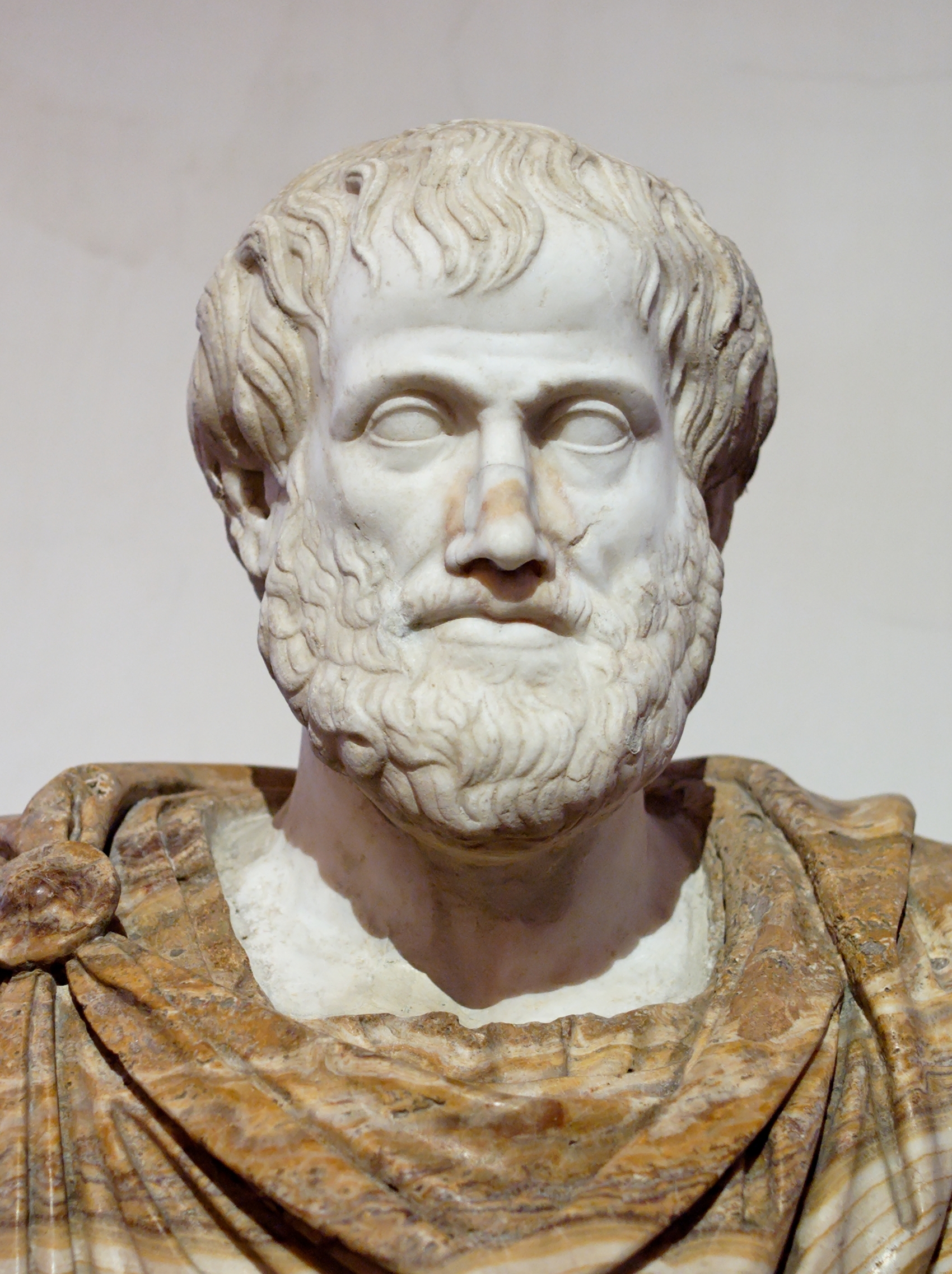
Aristotle was an ancient Greek philosopher and investigator of nature who lived from 384 to 322 BCE. A student of Plato, tutor to the young Alexander and founder of the Lyceum in Athens, he wrote on logic, ethics, politics, metaphysics, biology and the arts. His works generated centuries of debate across cultures. Although modern science superseded some of his positions, his concepts and questions remain subjects of investigation.
Birth and family
Aristotle was born in 384 BCE in Stagira, in the northern Aegean region of present-day Greece. His father, Nicomachus, was a physician associated with the Macedonian court. This background helps explain Aristotle’s lifelong Macedonian connections. Details of his childhood are limited, and ancient biographical stories do not all carry equal historical weight.
Education at Plato’s Academy
At about seventeen Aristotle moved to Athens and joined Plato’s Academy, remaining for roughly twenty years. Deeply influenced by Plato, he nevertheless developed his own criticisms, particularly of forms existing separately from perceptible things. Presenting the philosophers simply as opposites obscures Aristotle’s considerable intellectual debt to the Academy.
Assos, Lesbos and family life
After Plato’s death in 347 BCE Aristotle left Athens. He spent time around Assos in western Anatolia and later on Lesbos. He had connections with Hermias’s circle and married Pythias. This period is associated with natural investigations, especially his interest in living organisms. Theophrastus became an important intellectual collaborator.
Tutoring Alexander
At the invitation of Philip II of Macedon, Aristotle participated in the education of the young Alexander. It is among the best-known episodes of his life, although evidence about the lessons and their later political effects is limited. Alexander’s conquests and decisions cannot simply be attributed to his teacher’s philosophy.
The Lyceum and the Peripatetics
Returning to Athens in 335 BCE, Aristotle established his school at the Lyceum. Its members became known as Peripatetics. They pursued collaborative investigations into philosophy, living organisms, political arrangements and other subjects. The Lyceum was more than a classroom: it was a community organized around collecting material, comparison and discussion.
Works and their character
Surviving writings include the logical works grouped as the Organon, Physics, Metaphysics, On the Soul, Nicomachean Ethics, Politics, Rhetoric and Poetics. Much of the corpus resembles teaching material, drafts and ongoing investigations rather than polished books for a general audience. The arrangement and authorship of some passages remain scholarly questions.
Logic and syllogisms
Aristotle developed one of the earliest comprehensive formal investigations of valid inference. His theory of syllogisms examined which conclusions necessarily follow from specified premises. Validity alone does not establish that the premises are actually true. The lasting influence of these logical writings is an important part of his place in intellectual history.
The four causes
Understanding something, Aristotle argued, requires several kinds of explanation. His four causes are material, formal, efficient and final. A statue’s material, form, maker and purpose answer different explanatory questions. The term cause in this framework is broader than its ordinary modern use: it includes what something is made of and what it is for.
Metaphysics, substance and change
His metaphysical investigations concern being and its fundamental principles. Substance, the relation between matter and form, and the distinction between potentiality and actuality are central concepts. Distinguishing what something can become from what it actually is helps explain change. These ideas generated diverse interpretations in later philosophical traditions.
Natural philosophy and cosmology
In works such as Physics and On the Heavens, Aristotle investigated motion, time, place and cosmic order. He understood natural beings as having internal principles of movement and change. Modern science superseded his geocentric cosmology and aspects of his physics, while his questions about change and explanation retain historical and philosophical importance.
Biological investigations
Aristotle collected observations and comparisons about animal structures, reproduction, behaviour and functions. History of Animals, Parts of Animals and Generation of Animals are major examples. He sought to explain bodily parts through their contributions to an organism’s life. Valuable observations coexist with mistaken explanations, so his biology should not be identified with modern biological science.
Soul, perception and thought
On the Soul treats soul as a principle of living beings rather than a topic restricted to humans. Aristotle compares capacities including nutrition, perception, movement and thinking. He generally explains the soul–body relationship through form and matter. Some passages on human intellect have nevertheless produced competing interpretations since antiquity.
Ethics, virtue and living well
Nicomachean Ethics asks how human beings can live well. Eudaimonia concerns a flourishing life rather than a passing feeling of happiness. Character virtues develop through habituation, while practical wisdom guides action. The doctrine of the mean does not require choosing an arithmetic midpoint in every situation. Friendship and shared life are also important to his ethics.
Politics, citizenship and exclusion
Politics examines human life within the polis, or political community, comparing constitutions and their relationship to the common good. Aristotle’s account of citizenship was restrictive: he defended positions excluding women and enslaved people from equal political participation. These positions require historical examination and are incompatible with contemporary principles of equality and human rights.
Rhetoric and persuasion
Rhetoric investigates the available means of persuasion in particular situations. Important dimensions include ethos, concerning the speaker’s character; pathos, concerning the audience’s emotions; and logos, concerning argument. Aristotle does not reduce rhetoric to ornamental speech. His examination of evidence, audiences and context influenced later studies of communication and discourse.
Poetics, tragedy and catharsis
Poetics examines poetry and especially the structure of tragedy. Mimesis, or representation and imitation, is a central concept. Its emphasis on plot made the work influential in literary and theatrical theory. The precise meaning of catharsis through pity and fear remains disputed and cannot be reduced to one uncontroversial interpretation.
Final years and death
After Alexander died in 323 BCE, anti-Macedonian sentiment intensified in Athens. Given his Macedonian connections, Aristotle left the city for Chalcis on Euboea, where he died in 322 BCE. Popular sayings and anecdotes about his life should be distinguished from evidence contemporary with the events they describe.
Transmission and intellectual legacy
Aristotle’s writings and their commentaries passed through Greek, Syriac, Arabic and Latin intellectual settings. Al-Farabi, Avicenna, Averroes and Thomas Aquinas engaged with him in different ways. In Islamic thought he was also known as the First Teacher. His legacy involves not simply repeating his ideas but interpreting, criticizing and transforming them.