Albert Einstein
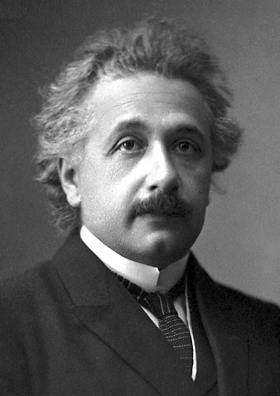
Albert Einstein was a theoretical physicist who transformed understanding of space, time, light, matter and gravitation. Known for special and general relativity, he also made foundational contributions to quantum theory and statistical physics. His 1921 Nobel Prize in Physics particularly recognized his work on the law of the photoelectric effect. His life extended from European scientific circles to exile under Nazi persecution, research at Princeton, and public commitments to peace and civil rights.
Birth in Ulm and childhood
Einstein was born into a Jewish family in Ulm on 14 March 1879 and spent much of his childhood in Munich. His family’s electrical business belonged to the technological setting in which he grew up. Stories about his childhood later became entangled with legends of genius. Portraying him as failing in every subject is inaccurate. His interests in mathematics and natural phenomena developed early, while difficulties in his educational life need to be understood through particular schools and examinations.
Education in Aarau and Zurich
After failing to pass the complete Zurich Polytechnic entrance examination in 1895, Einstein finished school in Aarau and obtained the Swiss Matura. He entered the Polytechnic in 1896 and graduated in 1900 with a teaching diploma in mathematics and science. ETH records show achievements as well as difficulties with courses. He used friends’ notes and pursued his own reading interests. These documents fit neither a portrait of a flawless student nor one of an inventor entirely detached from formal learning.
The Bern Patent Office and research
Einstein initially struggled to obtain a permanent academic position after graduation. Following tutoring and temporary work, he joined the Bern Patent Office in 1902. He continued investigating physical problems while employed there. His doctoral work submitted to the University of Zurich in 1905 and papers published that year demonstrate the level of his independent research. The patent-office period should not be portrayed as the accidental success of someone unaware of science: he followed contemporary physical debates closely.
Mileva Marić, family and personal relationships
Einstein met his first wife, Mileva Marić, while both were Polytechnic students. She was the only woman among the physics students in her cohort. Their marriage, family responsibilities and later separation form important parts of his personal life. He subsequently married Elsa Einstein. Family letters reveal relationships more complicated than the public image of genius. Recognizing Marić’s education and labour matters; specific claims about authorship of scientific work require their own documentary evidence.
1905: The miraculous year
Einstein’s four major papers published in Annalen der Physik in 1905 concerned light quanta, Brownian motion, special relativity and the relationship between mass and energy. The year is consequently called his annus mirabilis, or miraculous year. The label does not mean that the work emerged without preparation. His new treatment of existing experiments and theoretical problems was decisive. Contributions to different fields within a single year also show the limitations of identifying him only with relativity.
Light quanta and the photoelectric effect
Einstein proposed that light could behave as distinct energy packets during exchanges of energy. This approach helped explain phenomena such as light ejecting electrons from a metal. The light-quantum proposal became a fundamental step in quantum physics. The relationship between light’s frequency and energy transferred to electrons matters in the photoelectric effect. Simply making light brighter does not resolve every problem. His contribution showed the need for a new account of energy transfer alongside existing wave explanations.
Brownian motion and evidence for atoms
The irregular motion of small particles suspended in liquid had been observed before Einstein. His contribution was a quantitative explanation linking that movement with collisions by invisible molecules. This opened a route from microscopically visible particles to properties of the molecular world and strengthened evidence in debates about atoms. Rather than discovering atoms for the first time, Einstein provided a powerful means of testing molecular theory.
Special relativity: Rethinking space and time
Special relativity, introduced in 1905, brings together the form of physical laws for inertial observers in uniform straight-line motion and the invariance of light’s speed in vacuum. Everyday assumptions about simultaneity, duration and length must consequently be reconsidered. Observers in different states of motion can obtain different measurements of particular time intervals and lengths. This does not make everything arbitrary: precise relationships connect the measurements. The theory’s strength lies in establishing these relationships consistently and testably.
What does E = mc² mean?
Einstein’s relationship between mass and energy is familiar as E = mc². Here m denotes mass, c the speed of light in vacuum, and E rest energy. This expression alone does not describe every aspect of a moving object’s total energy. The relationship connects energy changes in physical processes with mass. It is not by itself a recipe for constructing a reactor or bomb. Developing nuclear technologies required numerous distinct experimental and engineering achievements.
Academic appointments and Berlin
Einstein held professorships in Zurich from 1909, Prague from 1911 and Zurich again from 1912. In 1914 he moved to Berlin, taking a position that allowed more time for research. These years included intensive work on general relativity. Correspondence with other physicists and mathematicians shows research developing through debate and shared knowledge. Understanding his originality does not require separating him entirely from the contributions of his contemporaries.
General relativity and gravitation
Einstein reached the field equations of general relativity in 1915. The theory relates gravitation to spacetime geometry: matter and energy contribute to geometry, which in turn affects motion. The equivalence principle provided important guidance. Under suitable local conditions, gravitational effects can appear to disappear within a freely falling system. Such insights formed the basis of thought experiments. General relativity represented a more comprehensive change than simply adding another force to special relativity.
The 1919 eclipse and worldwide fame
Observations in Brazil and Príncipe during the solar eclipse of 29 May 1919 investigated the deflection of starlight near the Sun. Work associated with Eddington, Dyson and Crommelin provided an important early test of general relativity. The announcement in November 1919 brought Einstein international fame. The observations supported his theory, but a scientific theory is not established once and for all by a ceremony or headline. Later measurements and independent tests also form part of its evaluation.
The 1921 Nobel Prize in Physics
Einstein received the Nobel Prize in Physics for 1921 in 1922. Its citation recognizes services to theoretical physics, particularly the discovery of the law of the photoelectric effect. Contrary to a common assumption, the official rationale was not directly general relativity. The distinction also recalls the importance of his work on light and quantum theory. The difference between the prize year and the year of its award explains why both 1921 and 1922 appear in accounts.
Contributions to quantum theory and his objections
Einstein helped establish quantum ideas while questioning whether the theory completely described nature. Extending Bose’s work, he contributed to quantum statistics. His criticisms do not mean that he rejected everything about quantum physics. His 1935 paper with Podolsky and Rosen opened a debate about the completeness of the quantum description. Known as EPR, it forms part of the historical background to later entanglement research. Reducing these issues to an isolated remark about dice misses their substance.
Nazi persecution, emigration and Princeton
The Nazi rise to power in 1933 was decisive in the Jewish-born Einstein’s decision not to return to Germany. He settled in the United States and joined the Institute for Advanced Study in Princeton, a research institution separate from Princeton University. He became an American citizen in 1940. Alongside research, he supported efforts to assist victims escaping Nazi persecution. Emigration was more than a change of employment: antisemitism and political violence shaped this transformation in his life.
The 1939 letter and the atomic bomb
At the initiative of Leo Szilard and other physicists, Einstein signed the letter to Roosevelt dated 2 August 1939. It warned that uranium research might produce powerful bombs and drew attention to German activity. The warning was one step in the history of American nuclear research. Einstein did not work on the Manhattan Project or design its bombs. The mass-energy relationship, his political warning and an operational role in weapons development are distinct matters. He later supported initiatives opposing nuclear danger.
Peace, civil rights and public responsibility
Einstein spoke about war, nationalism and oppression; his position on pacifism changed in response to the Nazi threat. He also opposed racism in America. His 1946 visit to Lincoln University is a documented example of his connection with civil rights. Before his death, he endorsed the Russell–Einstein Manifesto warning of nuclear weapons’ dangers to humanity. It was published in July 1955. These activities show a public life extending beyond scientific celebrity.
Unified fields and the limits of research
Especially in his later work, Einstein sought a common theoretical framework for gravitation and electromagnetism. This unified-field search remained a sustained objective during his Princeton years. It did not result in an accepted, experimentally verified final unified theory of nature. Recognizing that outcome does not diminish earlier achievements. Scientific research includes unresolved problems and unsuccessful directions alongside major successes.
Death and the archives
Einstein died in Princeton on 18 April 1955. Until his death, he continued thinking, writing and corresponding about physics and public questions. His life forms an important part of twentieth-century science shaped by wars and displacement. His papers and letters are studied through extensive documentary publications such as the Einstein Papers Project. ETH and Institute for Advanced Study archives also provide evidence about his work and life. These records matter when evaluating popular stories and sayings attributed to him.
Scientific and cultural legacy
Einstein’s work stands among modern physics’ foundations. His results concerning light quanta, molecular motion, relativity and mass-energy contributed to understanding nature at different scales. Their influence cannot be confined to one formula or prize. His cultural fame sometimes overshadows the actual research. Rather than presenting a solitary genius solving everything, it is more instructive to examine his questions, evidence, debates and scientific relationships. His lasting contribution includes replacing established assumptions with new, testable explanations.